From Anecdote to Comic Essay: What Changes on the Page
See how a comic essay turns a personal incident into a shaped argument, with a worked example to help you choose between an anecdote, reflection, or braid.
A comic essay makes a personal incident do more than arrive at a punch line. The event still needs a clear outcome, but the narrator’s changing interpretation becomes part of the entertainment. A confident mistake can be funny on its own; the essay asks what that confidence was trying to accomplish.
What does an anecdote do that an essay does not?
An anecdote is built around an incident. Someone says the wrong thing at dinner, a plan goes sideways, or confidence meets an inconvenient object. The reader follows the action toward its outcome and wants to know what happened next.
A comic essay can use the same incident, but it also follows a thought. The event becomes a way to examine the narrator’s assumptions, habits, or way of seeing. The idea need not be grand: a self-checkout prompt might lead a narrator to consider why every machine seems to be judging them personally.
Length does not create this difference. Adding the drive home, the weather, and a second cashier may make an anecdote longer without changing its purpose. The essay’s distinct pleasure comes from seeing the narrator’s earlier certainty beside the later account of what it meant.
Which shape fits the material?
Three forms offer different reading experiences: a standalone anecdote, a reflective comic essay, and a braided essay, which alternates an incident with a related line of thought.
- Standalone anecdote: If the incident has a satisfying comic turn and its meaning is already clear, keep the piece focused on the action. If the ending depends on understanding a larger habit, add reflection instead.
- Reflective comic essay: If the narrator’s changed interpretation is as engaging as the incident, let the account move between what seemed true then and what seems true now. If the commentary only explains the joke, return attention to the action.
- Braided essay: If a second strand, such as a recurring idea about politeness, alters the meaning of the incident, alternate the strands. If it merely interrupts the story, use a straightforward essay instead.
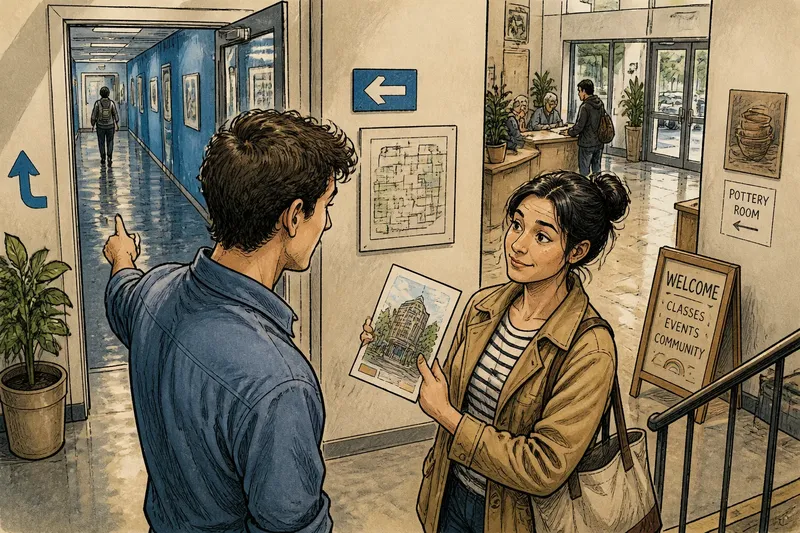
Say you have an anecdote about giving directions in a building you have never visited. You tell a visitor to take the blue hallway and turn left at the glass doors; the visitor follows your instructions, disappears, and returns from the opposite direction, carrying a brochure from the lobby. As a compact anecdote, the piece can end with your borrowed authority exposed by the brochure. As a reflective essay, it can include the narrator’s earlier decision to answer rather than admit uncertainty, then consider the social reward of sounding useful. A braided version might alternate that scene with a second strand about the narrator volunteering for tasks at work; the connection earns its place only if both strands sharpen the same discomfort with saying “I don’t know.”
The forms are not a ranking. A small anecdote does not owe anyone a philosophy, and a comic essay does not become wiser by hiding its best detail until the last paragraph.
How can reflection make a comic argument?
A comic argument is the idea implied by the incident and the narrator’s attention to it. Perhaps people mistake confidence for competence, or courtesy can turn a small inconvenience into a production. The claim can stay playful and provisional. Readers should be able to infer it from the story rather than receive it as a verdict attached at the end.
Reflection changes the angle of view. The narrator might compare what they believed at the time with what they believe now, notice a contradiction, or admit that a supposed principle was convenient only while it helped them. That creates a second surface of comedy: readers see both the event and the narrator’s interpretation of it.
Reflection need not follow every laugh with an explanation. A story about a botched apology, for instance, may not need a theory of communication. The more useful thought might be that the narrator still wanted credit for apologizing. That admission complicates the scene without explaining away its comedy.
What details help the reader follow the thought?
Keep a detail when it changes what the reader can picture or understand. The blue hallway matters if it makes the directions concrete; the brochure matters because it reveals where the visitor ended up. A list of every turn on the drive to the building belongs only if a wrong turn shapes the incident.
Small objects and repeated gestures can carry meaning without announcing it. A narrator who keeps pointing toward doors they have not checked may reveal a habit more efficiently than a paragraph declaring them overconfident. Background belongs when it changes the reader’s view of a choice or its consequences.
Reflection also benefits from restraint. One admission can alter the meaning of a scene; several paragraphs paraphrasing it can flatten the effect. Keep the thought that complicates the story, and remove commentary that merely repeats what the action already shows.
How do readers tell the forms apart?
Can a comic essay still tell a complete story?
Yes. Give the incident a beginning, development, and outcome, then let reflection change how the reader understands it. The story supplies movement; the essay adds a perspective that the sequence alone cannot provide.
Does every comic essay need a lesson?
No. It needs a developing perspective, not a moral printed at the bottom. An unresolved contradiction or persistent habit can make the original incident look different without claiming that the narrator has improved.
How much reflection belongs in a comic essay?
Use enough to change the reader’s understanding of the event. If a passage only says that the moment was awkward or repeats what happened, it is not adding a new angle.
When does a braided essay make sense?
Use a braid when both strands gain meaning from being placed together. If the second strand mainly interrupts the anecdote, a reflective essay will usually keep the reader oriented with less fuss.
How can you choose a shape before drafting?
Here is a fully worked invented situation. Imagine a narrator at a community center who tells a visitor to find the pottery room by taking the blue hallway and turning left at the glass doors, despite having arrived there only once. The visitor follows the directions, returns with a brochure from the lobby, and says the hallway led to the wrong wing.
First, the narrator writes the action in order: the request for directions, the confident answer, the visitor’s return, and the brochure. The ending already gives the anecdote a comic turn, so the starting decision is to keep that sequence intact rather than add background about the narrator’s whole day.
Next, the narrator writes what was happening in their mind: admitting uncertainty felt less comfortable than offering a plausible route. That thought changes the incident from a simple wrong direction into a scene about the appeal of sounding helpful. The narrator then adds a brief reflection on the difference between being useful and appearing useful; the result is a reflective essay, because one strand of thought grows directly from the event.
Finally, the narrator considers a separate thread about volunteering for workplace tasks. If that thread supplies scenes showing the same reluctance to say “I don’t know,” it could be braided with the community-center incident. If it offers only a general claim about overcommitment, it adds no new scene or meaning, so the reflective essay remains the better choice. The decision follows from what the second strand contributes, not from a preference for alternating sections.
For a comic essay about a personal incident, the useful test is whether reflection changes the reader’s view of the event. If it does, the added thought earns its space. If it does not, let the anecdote finish on its own terms—and leave the narrator’s grand theory of directions in the lobby.